
GSPA Advisory Council Feature Blog Post: Adam Throne
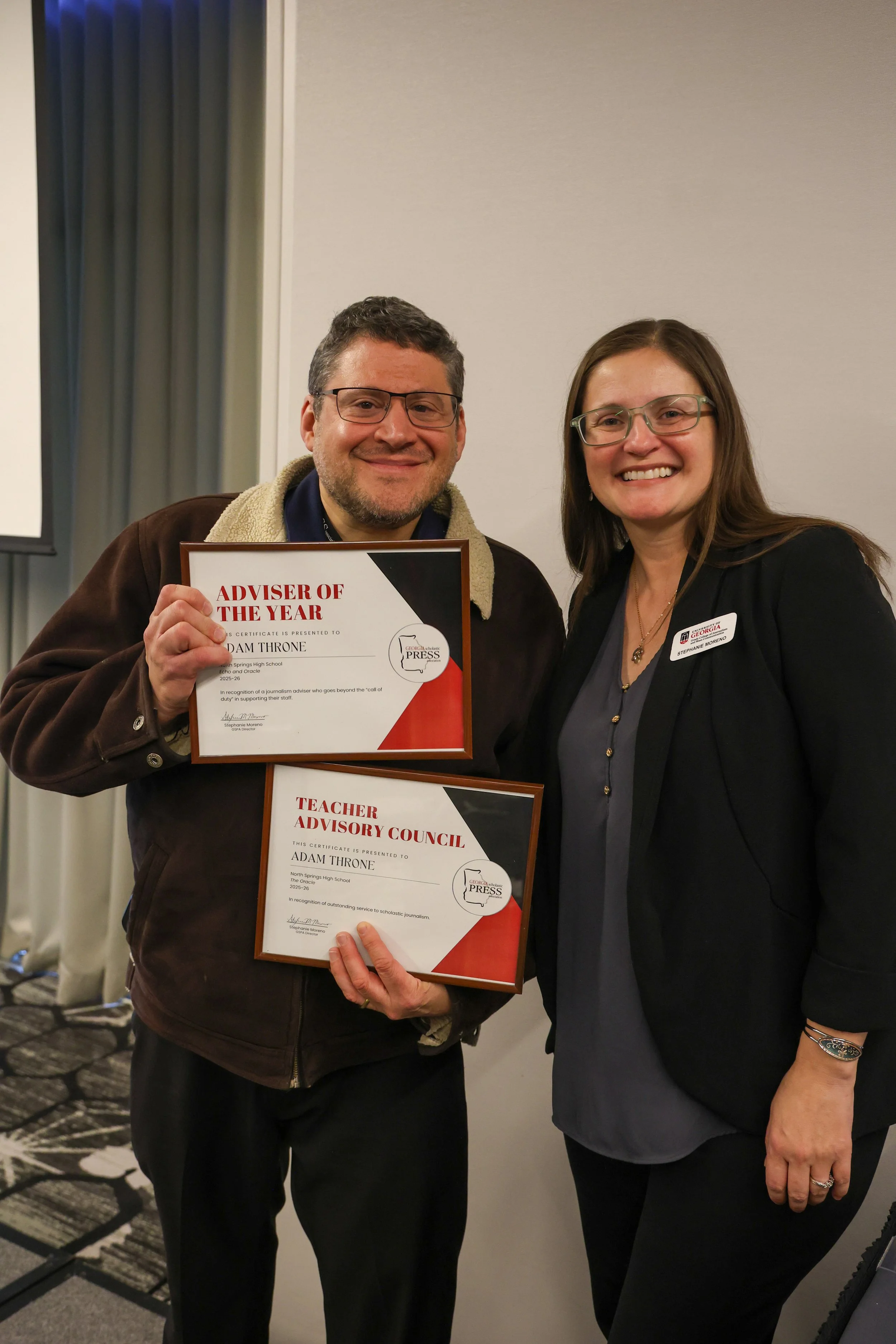
/GSPA is proud to highlight one of our GSPA Advisory Council members, Adam Throne, an adviser at North Springs High School.
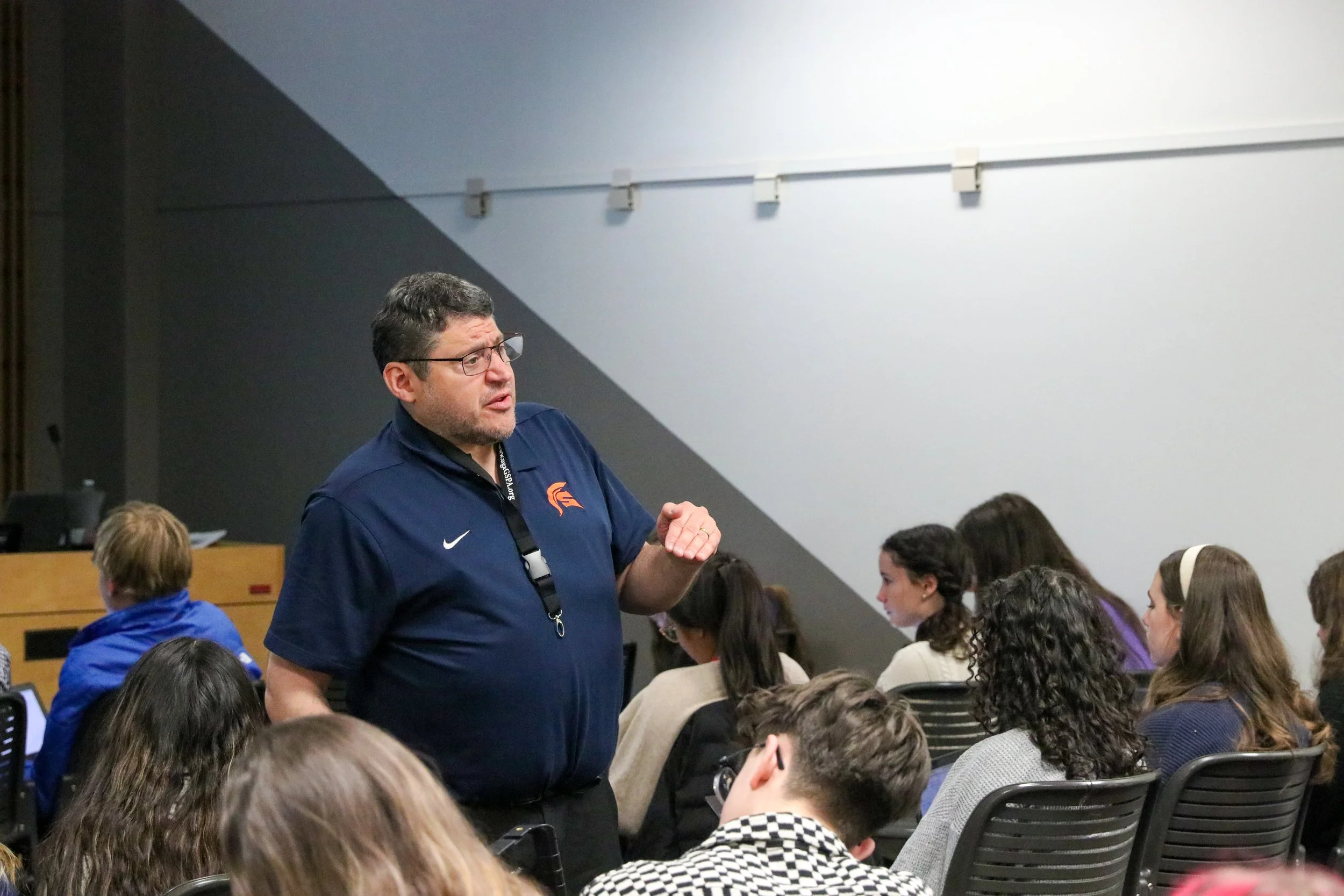
Adam Throne teaches English Literary Arts, Creative Writing, and Journalism at North Springs High School in Atlanta, Georgia. He has served as the long-time sponsor of the school's Echo Literary Magazine and online web paper, The Oracle. He initiated the school's ongoing grant partnership with Vox ATL newspaper/podcasting, and developed school grant programs with the Atlanta Shakespeare Company, the Alliance Theater, and Graphic Novels in the classroom. He serves as North Springs writing contest coordinator, encouraging students to tell their personal stories through the Georgia Laws of Life Essay Contest, the Young Georgia Authors Writing Competition, and spoken word presentations at the school's annual Arts Fest Festival. He is a continuing member of the school's PBIS committee, helping with student and staff engagement. This year, he joined ten colleagues in North Springs' STEAM pilot program, in which he collaborated on student-driven American Literature-inspired Podcast and Dance projects.
In addition to his roles at North Springs, Adam has served as a judge for the Georgia PTA's Reflections contest, the Georgia Writer's Museum's Writing contest, and the Southern Interscholastic Press Association's on-site convention contest. This past year, he worked with the Georgia Rotary Club to update its Laws of Life Essay Contest manual based on the new Georgia ELA Standards. Adam is a frequent presenter at many area writing events and conferences, including the Rotary Club, Atlanta Writers Club, GSPA's Fall and Spring Conferences, and most recently, SIPA's annual convention. In addition to serving on the GSPA Advisory Board, he is a newly-appointed board member to SIPA, and was recently named GSPA's 2026 Advisor of the Year. Prior to teaching, Adam worked in New York as a journalist, promotional writer, and content manager for numerous publications, including Kaplan Education Centers, CMP Media, and Shoot Magazine. He has also written for and produced various Atlanta area publications and short films, but his first love remains a commitment to teaching and creative writing.
What drew you to get involved with GSPA as an Advisory Council member, and what keeps you committed?
I've long appreciated GSPA and its mission, and enjoy being able to give my students opportunities outside our own school's bubble through its conferences, contests, and tours. I also appreciated the opportunity to present and learn from other professionals. I was honored to be asked to join GSPA's advisory board last year, and see it a way to give back through building connections and contributing my input and resources to help others better their work. GSPA did that for me.
What is a particular point of pride you have with working with student journalists?
There's always a thrill in seeing students react when they see their work in print, and an equal thrill in students getting publicly recognized, since writing is usually a personal and isolating effort. More than that though, is the thrill of giving students a voice, whether it's through an editorial or through sharing their poetry with an audience. This became critical to me during the "lost year" of COVID, when we were forced into lockdown and teaching online. Out of necessity, our online web paper transformed into a medium where students could express their fears and uncertainties, both creatively and artistically. We ended up with more creative submissions that year than any other year, and I feel it really helped people -- including me — get through a lot! The work was a powerful record of the moment, and we made it a point to collect it all in a book and publish the following year with new work as the "aftermath." That journal stands as not just another annual publication, but as a time capsule and testament to the hardships and endurance of our students during a time I hope we won't ever repeat again.
Looking toward the future, what do you hope your legacy will be in shaping the next generation of storytellers?
I don't know that anyone can know their legacy, but I hope it's in using writing to build true connections, whatever the medium. Early in the school year, I encourage my colleagues to get to know their kids through various writing exercises, as many kids are more willing to share on the page than in person. It's a great way to build bridges, and I do the same thing with my staff before we get into any content or publishing. One small connection can spark a love of learning and writing, and make students lifelong storytellers. I've had students go on to become professional writers, performers, and even colleagues, who then give back to others by sharing their own passion for the craft. I've even had a student who became a physician tell me that their work as an editor helped them build their confidence not only as a leader, but in becoming a stronger healthcare provider by really listening to their patients' concerns. In this day and age where journalists, arts facts, and long-held beliefs are heavily politicized, and where technology has become a serious threat to what journalists do, personal writing is a critical reminder of our own humanity. I also feel that as we've become bombarded by media and misinformation, we need teach not just to write and ingest news, but to deeply analyze and respond to it, and I try to use creative tools to do this. My experience during COVID has shown that by preserving memories through our stories, we can create what we need to persevere — that's the hope.